
Breast & endocrine
Breast Conditions & Cancer
A breast lump is not always cancer, but it should be assessed.
a:1:{i:0;s:171:"Breast changes may be caused by both non-cancerous and cancerous conditions. Early assessment helps determine whether imaging, biopsy, monitoring or treatment is required.";}
When should you be assessed?
- a:6:{i:0;s:27:"A new breast or armpit lump";i:1;s:32:"A change in breast shape or size";i:2;s:42:"Skin dimpling or an orange-peel appearance";i:3;s:23:"A nipple turning inward";i:4;s:34:"Bloody or unusual nipple discharge";i:5;s:42:"Skin changes or a wound that does not heal";}
How is it assessed?
- a:4:{i:0;s:20:"Clinical examination";i:1;s:44:"Ultrasound and/or mammogram when appropriate";i:2;s:27:"Biopsy of a suspicious area";i:3;s:45:"Staging investigations if cancer is confirmed";}
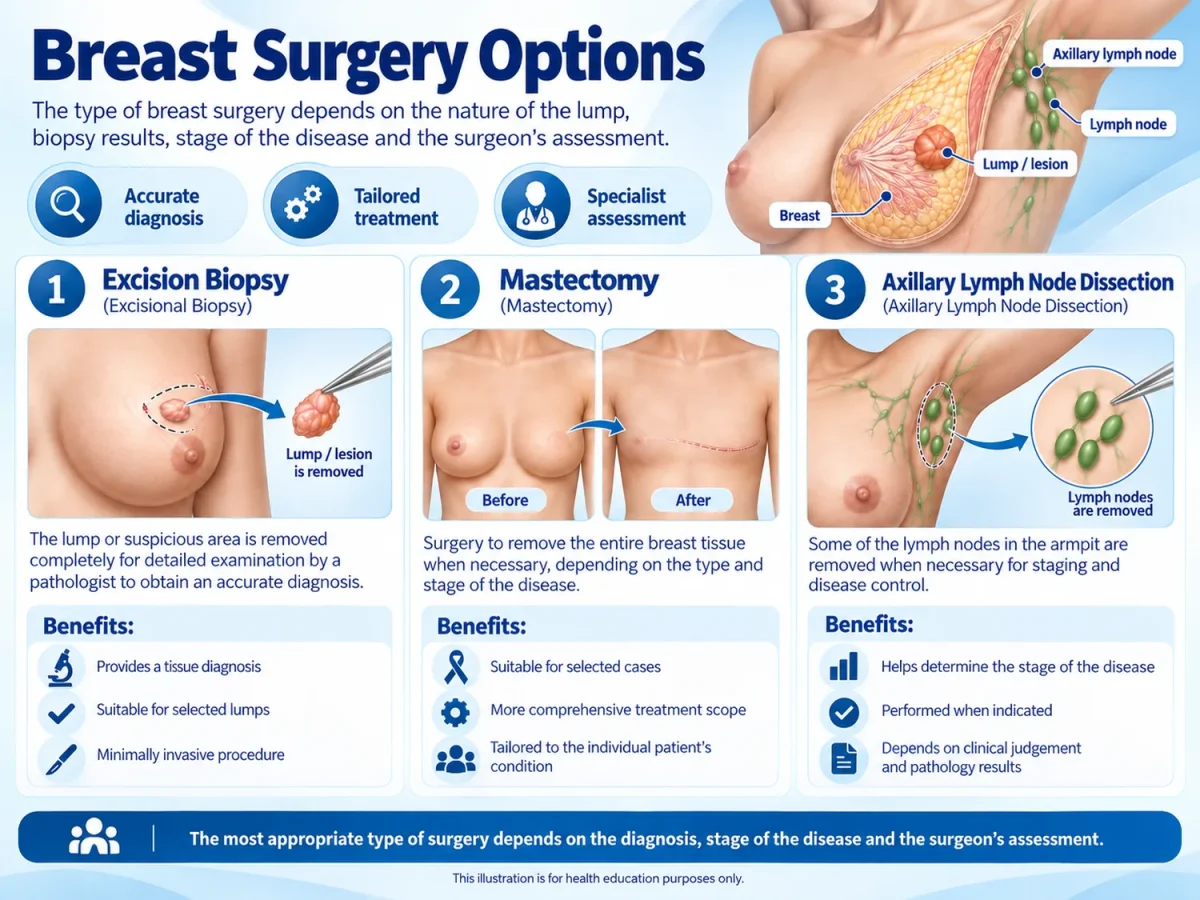
Treatment Options
a:1:{i:0;s:314:"Breast cancer treatment is tailored to the type and stage of disease. Surgery may involve breast-conserving surgery (wide local excision) or mastectomy, with assessment of the lymph nodes when indicated. Other treatments such as chemotherapy, radiotherapy, hormone therapy or targeted therapy may also be required.";}