Skip to content

Health information

Is Every Stomach Pain “Gastritis”?

Endoscopy · 1 min

Abdominal pain has many possible causes, and the location of pain can provide useful clues.

Pain in the upper abdomen has many causes

“Gastritis” is often used for any stomach pain, but it is a specific condition — inflammation of the stomach lining — and many people who have it feel nothing at all. The pain itself is better described by its pattern and its position.

Vomiting blood or passing black, tarry stools may indicate bleeding. Seek urgent medical assessment immediately. If bleeding is ongoing, or you feel faint, very weak or breathless, go to the nearest emergency department.
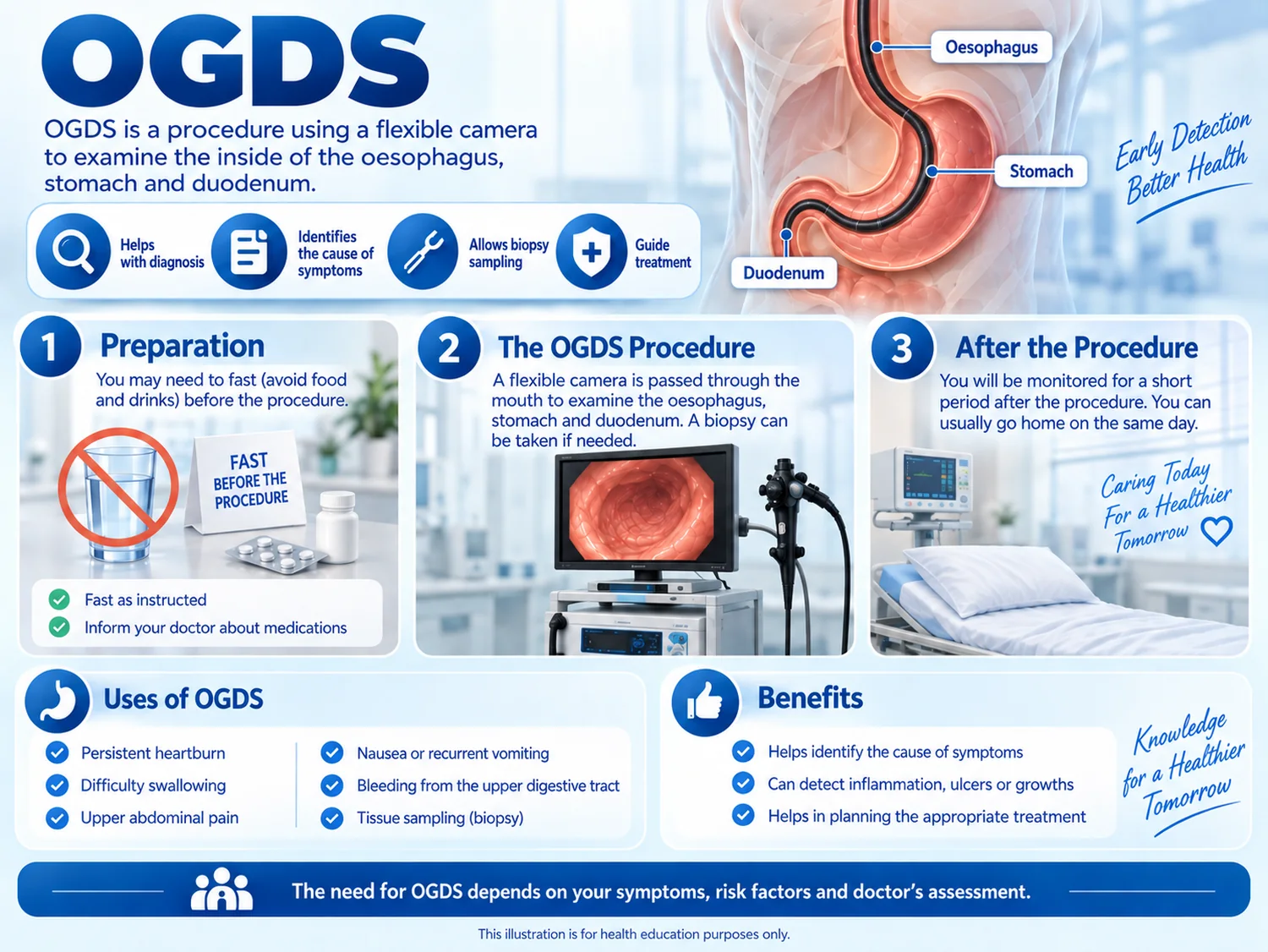
Infographic of OGDS or gastroscopy, showing a flexible camera examining the stomach.

Upper abdominal pain can have several causes, including problems affecting the oesophagus, stomach or duodenum. Pain in the right upper abdomen, especially after meals, may be related to the gallbladder. The location of pain alone cannot establish a diagnosis.

Because these symptoms overlap with reflux, ulcers and other conditions, the assessment looks at the pattern, at any medicines you take — anti-inflammatory painkillers can irritate the stomach lining — and at whether warning signs are present. An endoscopy looks directly at the stomach lining when it is needed.

If your symptoms persist or you are unsure of the cause, arrange an assessment.

OGDS, or gastroscopy, uses a flexible tube with a camera passed through the mouth to examine the oesophagus, stomach and first part of the small intestine. It helps identify possible causes of upper gastrointestinal symptoms.

When should you be assessed?

  • Persistent heartburn or upper abdominal pain
  • Difficulty or pain when swallowing
  • Recurrent vomiting
  • Vomiting blood or passing black stools
  • Anaemia without a clear cause
  • Unexplained weight loss or loss of appetite

Health information

Patient Education

Read health information
  • Blood in the Stool: Haemorrhoids or Cancer?

    Why blood colour alone is not enough to determine the cause.

    Colorectal & perianal

    Read More
  • Colorectal Cancer Can Develop Without Symptoms

    The importance of screening and understanding risk factors.

    Colorectal & perianal

    Read More
  • Do Haemorrhoids Need Surgery?

    When conservative treatment may be enough and when a procedure is considered.

    Colorectal & perianal

    Read More
  • Haemorrhoid Grades

    A simple explanation of Grades I to IV.

    Colorectal & perianal

    Read More

Book an Appointment

If your symptoms persist or you are unsure of the cause, arrange an assessment.